

Overview
China remains one of the largest markets in the world for foreign English teachers, with well over a thousand international schools alone actively hiring, alongside a huge public school system, a growing bilingual school sector, and strong demand at university level. Living costs are low relative to salary in most cities, and many packages include housing, making the savings potential considerable, particularly outside the very largest cities.
Types of schools and institutions
Public schools are the most accessible entry point for new teachers in China, with predictable Monday to Friday hours and moderate teaching loads. Packages often include free on-campus housing, paid public holidays and long winter and summer breaks, and class sizes are typically large.
- ✓Bachelor's degree (any subject)
- ✓120-hour TEFL/TESOL
- ✓Clean apostilled background check
China's private training centre sector contracted significantly following the 2021 regulations restricting for-profit tutoring of compulsory education subjects for students in years 1 to 9. Adult language training and business English remain active in private markets, and training centres employing foreign teachers in these areas continue to operate, with salaries comparable to or above public school rates.
- ✓Same as public schools
International kindergartens serving children aged two to six are a significant, well-paid market in China's Tier 1 and Tier 2 cities. Daytime hours are a genuine lifestyle advantage over evening language centre work.
- ✓As above
- ✓Early childhood experience or qualifications preferred
Bilingual schools blend international teaching approaches with the Chinese national curriculum and are one of the fastest growing parts of the market, primarily serving Chinese nationals rather than expatriate families. Facilities are generally excellent and pay sits comfortably above the public sector, though marking loads can be heavier.
- ✓TEFL minimum
- ✓Recognised teaching licence increasingly preferred
International schools sit at the top of China's market, offering full curriculum ownership, subject specialism and a professional school environment. The strongest schools recruit well in advance and expect a recognised teaching licence alongside genuine classroom experience.
- ✓Recognised home country teaching licence
- ✓2 to 5+ years' classroom experience
University teaching appeals to those prioritising work-life balance, with lighter teaching loads, long paid holidays and free or subsidised on-campus housing common at Chinese institutions. Requirements rise sharply for research-focused professorial roles at China's leading universities.
- ✓MA minimum for lecturers
- ✓PhD and publications for professorial roles
China's large multinational corporate base creates steady demand for business English training at executive level, concentrated in Shanghai, Beijing, Shenzhen and Guangzhou. Trainers work either for specialist training companies or as established freelancers, with standard business hours a genuine advantage over school-based teaching.
- ✓Professional experience
- ✓Strong business English generally expected
Visa and work permit
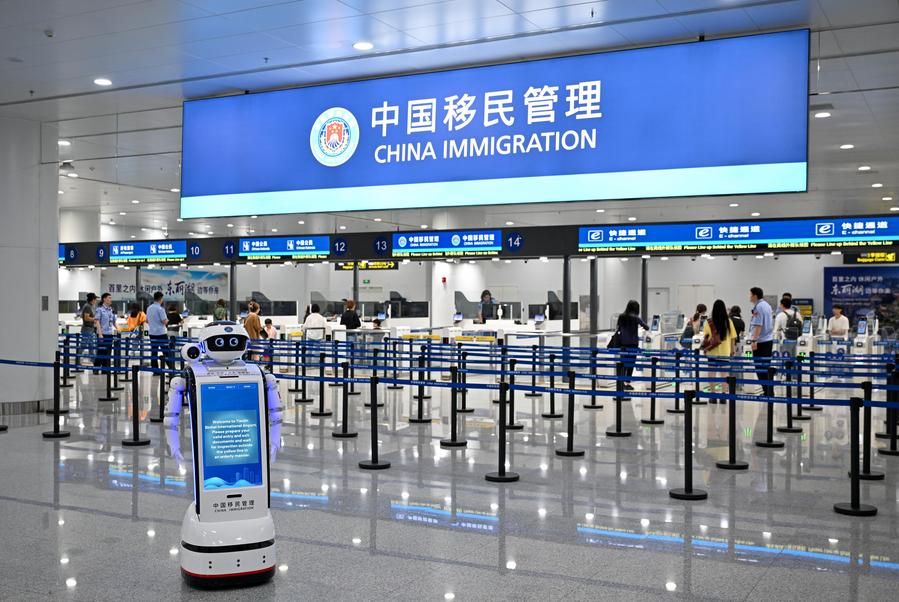
The Z visa is the only lawful route to paid work in China. Working on a tourist or business visa is illegal and carries real consequences, including fines, deportation and re-entry bans, so this should be the first thing any teacher checks about a prospective employer.
- 1A bachelor's degree in any discipline is a non-negotiable requirement, along with a 120-hour TEFL or TESOL certificate
- 2A clean criminal background check is required, apostilled rather than fully legalised at embassy level, since China joined the Hague Apostille Convention in November 2023
- 3Applicants are scored under a points system (education, salary, age, experience and other factors); most teachers fall into Category B
- 4Enforcement tightened again from February 2026, with Beijing and Shanghai now strictly applying salary thresholds and age limits that had been loosely enforced in recent years, so it is worth confirming current requirements with an employer before committing to a move
- 5International schools generally expect a recognised home country teaching licence plus at least two years of classroom experience
Hiring season
China's academic year runs September to July. Public and bilingual schools mostly hire in the months leading up to a September start, while the international school sector runs the longest lead time of any major Asian market: the strongest schools recruit 10 to 18 months ahead, with October to March being the peak hiring window for the following August or September.
Career progression

Schools in China offer excellent career growth potential. Schools often support long-term employees in making transitions into higher positions through training and qualification advancements, as well as offering greater opportunities when available. Typical career progression in China can be seen as:
Stage
What it looks like
Entry and adaptation
Years 1–2
Public, bilingual or international kindergarten placement while building classroom experience, basic Mandarin and an international teaching portfolio; begin working towards the two-year experience threshold if not already met
Bilingual or international school entry
Years 2–4
Move into a bilingual school for higher pay and more curriculum responsibility, or into an international school once a recognised teaching licence is in hand; this is the pivotal transition point
Middle leadership
Years 4–6
Head of Department or IB Coordinator roles, with curriculum ownership and staff mentoring; an MA in Education or Leadership becomes a key differentiator
Senior leadership
Year 6 onwards
Principal, Deputy Principal or Associate Professor roles at Tier 1 schools or Double First-Class universities, among the most competitive and best paid positions in Asian education
A day in the life
Sarah is a 28-year-old from Melbourne, Australia who walked away from a marketing career to stand in front of a classroom in Shanghai. Armed with a TEFL certificate, a one-way ticket and a healthy dose of uncertainty, she made the leap and has not looked back once.

A typical day
| 7:00am | I wake up, get ready, and have a quick breakfast of youtiao and soy milk from a stall near my apartment. |
| 7:45am | I commute via the Shanghai Metro to a client's office in Pudong, reviewing the day's lesson plan on the way. My language school sends me out to a few corporate clients each week for on-site lessons, and it's honestly one of my favourite parts of the job, it gets me out of the centre and into different corners of Shanghai I'd probably never see otherwise. |
| 9:00am to 12:00pm | I teach a large business English class for one of the school's corporate clients, a group of staff from a finance firm. Today's topic was meeting foreign clients and giving presentations, so we worked through useful phrases for introductions and small talk, structuring a clear presentation, and handling questions afterwards. Topics change week to week depending on what the client needs, sometimes it's presentations, sometimes negotiation language or just everyday meeting English. |
| 12:15pm | I usually grab a quick noodle or rice dish near the client's office, or order through Meituan if I'm heading straight back to the centre to prep for the afternoon. Trying whatever's good near whichever office I'm visiting that day has become a nice little bonus of the job. |
| 1:00pm to 2:00pm | Back at the language centre, I plan the afternoon and evening sessions and mark work from the morning group. |
| 2:30pm to 5:00pm | Afternoon classes are a mix, a general younger learners' group, and a small exam-prep class I run for a few students sitting entrance assessments for an international school later this term. We're working through interview-style questions, timed reading comprehension, and just getting them comfortable speaking English under a bit of pressure, since the interview component tends to worry them more than the written test. |
| 5:00pm to 6:30pm | I head home on the metro, cook a quick pasta dish or something, and get changed for the evening. |
| 6:30pm | I head to my nearby station, where they hold events and evening classes for workers like me. |
| 7:00pm to 9:00pm | I take evening Chinese classes with other working professionals attending after their own jobs finish. |
| 9:15pm | If I don't work the next day, my classmates and I usually go for a quick dessert somewhere or have drinks at a nearby bar. We often try something local, then I head home via DiDi if it's a late finish. |
Taxes
China uses a progressive monthly income tax system, withheld by the employer and reconciled in an annual settlement each March. Many international school salaries are quoted net, which matters given how quickly the higher bands apply.
Foreign employees generally contribute to mandatory social insurance (pension, medical, unemployment, work injury and maternity), though participation and rates vary by city; some cities exempt or partially exempt foreign staff, which is worth clarifying at the offer stage.
Cost of living
China's cost of living is genuinely low by international standards. Even entry-level public school pay stretches a long way outside the largest cities, though Shanghai and Beijing run noticeably higher than the rest of the country, which is a strong positive for savings potential.
Life in China
Housing and renting
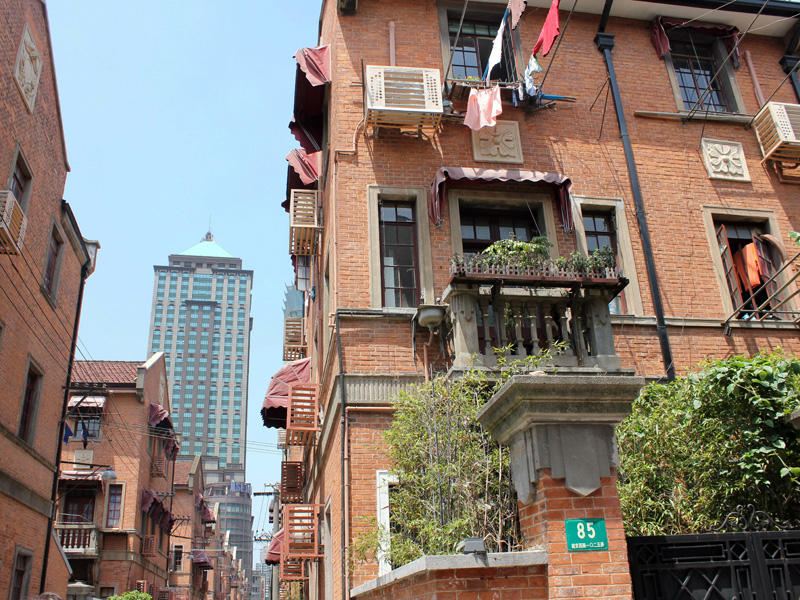
In the largest cities, renting usually goes through a local agency rather than directly with a landlord; Lianjia (Beike) and 5i5j are two of the most widely used platforms and agency networks in Tier 1 cities, alongside smaller local agents in Tier 2 and 3 cities. A typical arrangement is two months' rent as a deposit plus one month's rent as an agency fee. Many reputable schools provide housing or a housing allowance as part of the package, which is worth confirming and valuing properly when comparing offers.
Useful Platforms for House Hunting
Ziroom (自如) is useful for managed apartments, while Lianjia (链家) carries agency listings. Expat Facebook groups can also be helpful for finding sublets.

Quality of life and where to live
Quality of life varies enormously by city. Safety is generally high, and violent crime against foreigners is rare, though air quality in some cities can be worse than others.
- Beijing:Capital and cultural centre, richest history and hutong neighbourhood life, but air quality is notoriously variable in winter
- Shanghai:China's most cosmopolitan city, the deepest international school market, and the best-developed expatriate infrastructure
- Shenzhen:Younger and more modern, adjacent to Hong Kong by metro, with a lower cost of living than Beijing or Shanghai
- Chongqing and other Tier 2 cities:Lower cost of living, excellent food culture, and a noted reputation for a relaxed pace and warm welcome
Daily life and practical tips
- →WeChat functions as the operating system of daily life: messaging, payments, official school communication and social arrangements virtually all run through it.
- →Alipay is another widely-used digital payment system in China. The app has an English version and can be linked to a foreign credit card, though it's recommended to connect it with a local Chinese phone number.
- →Meituan and Ele.me handle food delivery for almost anything, from restaurant meals to groceries, usually arriving within 30 minutes.
- →DiDi is the default ride-hailing app and works much like Uber, with fares paid directly through the app.
- →Ctrip (Trip.com) and 12306 (the official rail booking site) are the go-to platforms for booking train and flight tickets.
- →Workplace culture places real value on maintaining harmony and handling disagreements privately rather than in public, which is worth keeping in mind when settling into a new school.
- →Even basic Mandarin (HSK Level 2, around 300 words) makes a noticeable difference to daily life, particularly outside the biggest cities.
- →Supermarkets: Carrefour, Walmart, RT-Mart and Hema are the main supermarket chains, with Hema notable for its integrated delivery service.
Healthcare
Private hospitals catering to the international community, such as those in the Parkway Health and United Family networks, provide genuinely world-class care with English-speaking doctors, though costs are high without insurance (a GP visit can run RMB 600 to 1,500). International health insurance is a standard part of any reputable international school package. Public hospitals are far cheaper but operate almost entirely in Mandarin, so teachers outside the international school sector should confirm their insurance coverage before accepting a role.
Banking

ICBC (Industrial and Commercial Bank of China) and Bank of China are generally the most straightforward for foreigners to open an account with, usually requiring a passport and residence permit plus employer documentation. In practice, daily life runs through WeChat Pay and Alipay far more than through a physical bank card, so linking a Chinese account to WeChat as soon as it is set up is a priority in the first week.
First Weeks: Step by Step

Airport Arrival
Your employer will typically arrange an airport pickup. Confirm before departure. China's major airports are large and navigable in English.
Police Registration (Days 1–3)
Register your address with the local Public Security Bureau (PSB) within 24–48 hours of arrival. Your employer will assist. This is a legal requirement and must be completed every time you move address.
Health Check (Week 1)
Complete the mandatory medical examination at a government-designated clinic in China. Tests include blood test, chest X-ray, ECG, and general health measures. Your employer schedules this and usually covers the cost.
Residence Permit (Within 30 days)
Your employer submits the application to convert your Z Visa to a Residence Permit at the local PSB. Required documents: health check results, rental contract, work permit, passport. The Residence Permit is your primary identity document and work authorisation in China.
Bank Account (Week 1–2)
Open a Chinese bank account: ICBC and Bank of China are the most foreigner-accessible. Required: passport, Residence Permit (or application receipt), employer documentation. This is required for salary, WeChat Pay, and Alipay.
WeChat Pay and Alipay Setup (Week 1–2)
Link your Chinese bank account to WeChat Pay and Alipay. This unlocks digital payments for virtually everything: restaurants, transport, supermarkets, medical appointments, delivery apps, and social events.
SIM Card
Purchase a Chinese SIM card (China Mobile, China Unicom, or China Telecom) at any of their branches or phone shops; passport required. Data plans are affordable (¥100–200/month for 30–50GB).
Travel possibilities and average costs
China's high-speed rail network makes regional domestic travel fast and comfortable, and its major cities are well connected internationally through Shanghai Pudong (PVG), Beijing Capital (PEK), Guangzhou Baiyun (CAN) and Shenzhen Bao'an (SZX) airports. Fares above are indicative and vary with season and how far ahead they are booked.
Domestic travel
Domestic travel around China is extremely attractive. China's vast size offers travellers a wide range of experiences, from grassy plateaus in Inner Mongolia to mountainous terrains in Yunnan. Foreigners in China often take the opportunity to explore the country on weekends and holidays. Favourite destinations include:

- Vast mountain scenery and river cruises
- Spicy and sour cuisine

- Tropical island and sandy beaches
- Non-spicy cuisine

- Dramatic landscapes of grasslands and desert
- Non-spicy cuisine
International travel
China's location in Asia makes travel to nearby countries easy and convenient. With several long weekends and holidays throughout the year, foreigners in China often take advantage of this opportunity to explore more of Asia. Favourite destinations include:

- Culture, food, history, and sightseeing
- ¥RMB 1,500–2,500 return

- Beaches, island-hopping, and relaxation
- ¥RMB 1,200–2,000 return

- Palaces, shopping, food, and nightlife
- ¥RMB 900–1,500 return
Phrase book for daily life

A handful of everyday phrases in Mandarin (pinyin romanisation), useful from the first week.
Jobs in China
Browse current teaching and language education positions available in China.
View PositionsAny businesses, organisations, schools, banks, apps, or services mentioned in this guide are included for informational purposes only. EastRecruit is not affiliated with, endorsed by, or in partnership with any of them.