
Can you walk us through how your career got to where it is now?
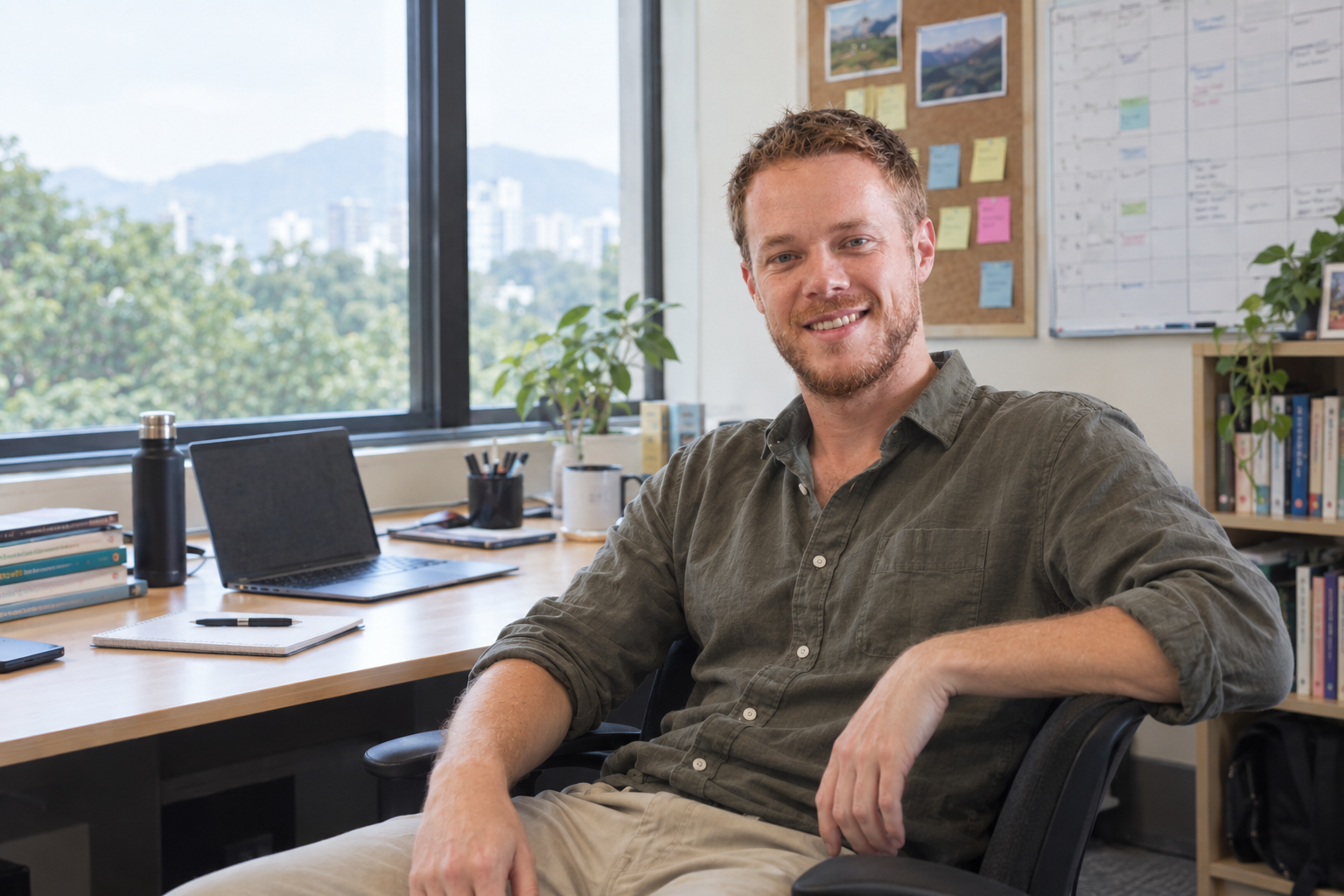
I started teaching straight out of university and spent a decade in secondary schools in Scotland. I genuinely loved the classroom but I'd always had an eye on leadership, and the honest truth is that the UK system wasn't going to get me there quickly. Progression is slow, heavily political and tied to seniority in ways that have very little to do with actual ability. When I started looking internationally I was genuinely surprised by how much my experience was valued. My decade of teaching wasn't just acknowledged, it opened doors. I was offered a department head position within my first year in Korea, something that realistically would have taken another five to seven years at home. Two renewals later I'm still here, still growing, and now involved in school-wide curriculum planning alongside my departmental responsibilities. The career trajectory here has been everything I wanted and couldn't quite access back home.
A typical day
- 6:00am
- Early start, a short run or outdoor exercise before getting ready for the day.
- 7:00am
- Breakfast at home, then a short commute to school.
- 7:45am
- Arrives at school, reviews the department's weekly schedule and gets ahead on some pending assessment moderation before the staff room fills up.
- 8:15am
- Briefing with the English department team, setting priorities for the week. With an inspection coming up soon, there's an added focus on getting curriculum documentation in order.
- 8:45am to 3:00pm
- Teaching timetable mixed with department administration: lesson observations, curriculum planning, and covering senior English classes. A busy day often means a mix of general classes, an observation of a newer teacher, and a senior class working through exam texts.
- 12:00pm
- Lunch in the staff room, usually a simple Korean set meal from the school cafeteria, and a decent chance to actually switch off for twenty minutes.
- 3:15pm
- After-school meetings with school leadership on curriculum standards and upcoming inspections, useful for seeing what the school's actually prioritising beyond the classroom.
- 4:00pm
- Coaches or supports the school's soccer training sessions most afternoons, a role he's taken on alongside his teaching duties, and a nice change of pace from the classroom.
- 5:30pm
- Heads home, sometimes joining a five-a-side game with other teachers at a local pitch first.
- 7:00pm
- Dinner, sometimes a Korean barbecue or bowl of noodles, or a simple home-cooked meal, depending on the day.
- 8:30pm
- Evening downtime, catching up with news or friends, or just watching TV or a movie.
What pushed you to make the move?
I loved teaching but I'd stopped growing. Same school, same routines, same staffroom conversations. I knew I was capable of more but the system at home doesn't always make room for ambition. Moving abroad felt like the only way to genuinely reset. I wanted to lead, not just teach, and international schools offer that path at a pace that genuinely excites you rather than exhausts you.
What's it like leading a department here versus the UK?
Night and day. The students are motivated, the resources are excellent, and there's a genuine respect for educators built into the culture here that you feel from day one. I have more autonomy, more support and more impact than I ever had at home. There's an expectation that you'll bring ideas, that your opinion matters, that leadership means actually leading. The difference in professional culture is something you feel immediately and it doesn't wear off.
Why Busan specifically?
Busan doesn't get the attention Seoul does but it absolutely should. You've got the sea, the mountains, the best seafood markets in Asia and a pace of life that's actually liveable without being sleepy. It has all the culture, food and nightlife you could want with none of the relentlessness of a capital city. I've extended twice and every time the decision has felt completely obvious.
What does your life look like outside school?
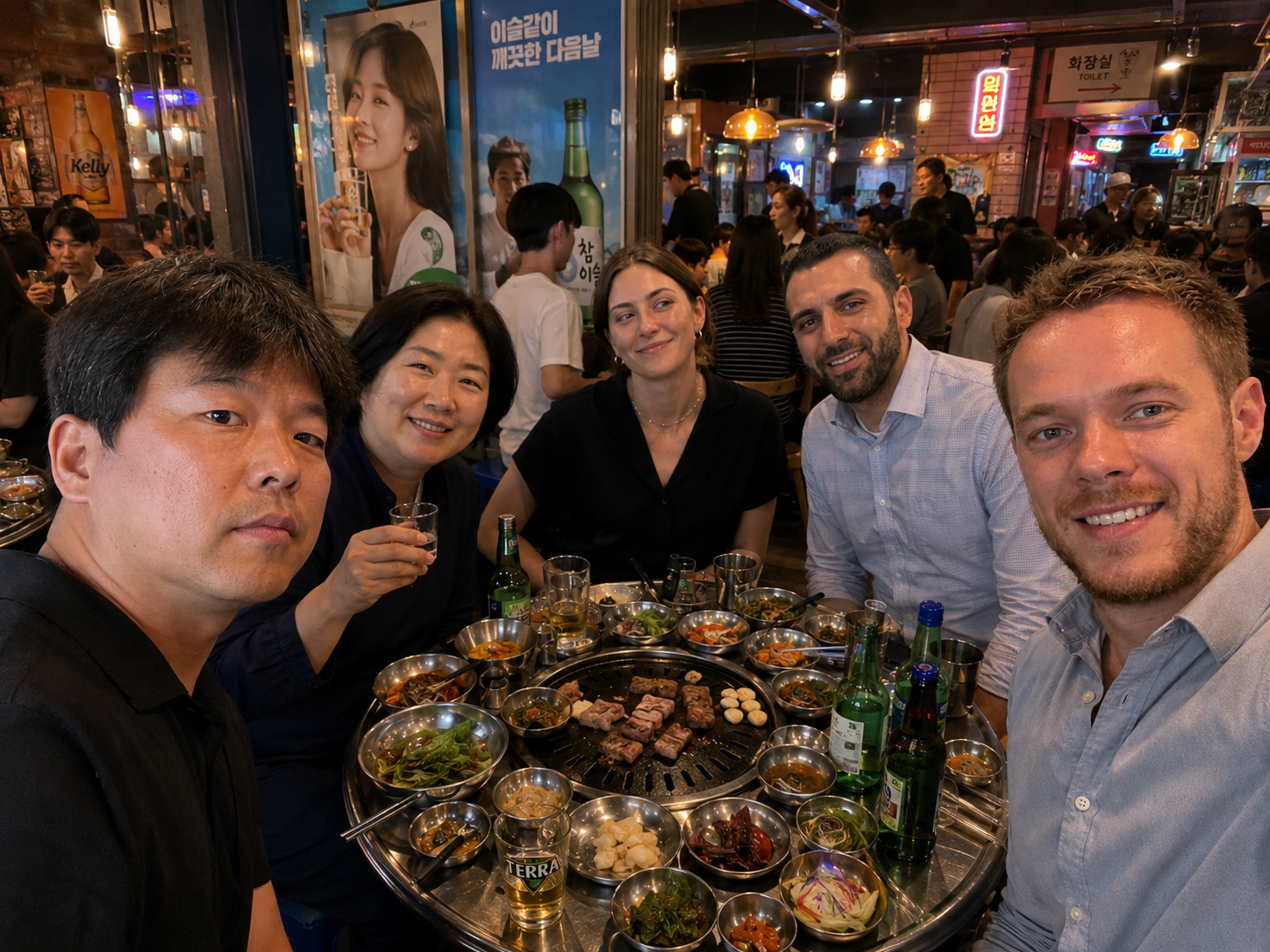
It's one of the genuine highlights of living here. Busan has a thriving expat community but it's more relaxed and close-knit than what you'd find in Seoul, which suits me perfectly. I play five-a-side football twice a week with a mixed group of Korean and international guys, and there's a proper league that runs through the cooler months that has taken over my Tuesday and Thursday evenings in the best possible way. I've also got a regular group who meet for Korean barbecue most Friday nights, which sounds simple but has become one of the things I look forward to most. That consistency is what makes a place feel like home. I've also taken up open-water swimming at Haeundae on weekend mornings through summer, which still feels slightly improbable for someone from Edinburgh, but here we are and I wouldn't trade it.
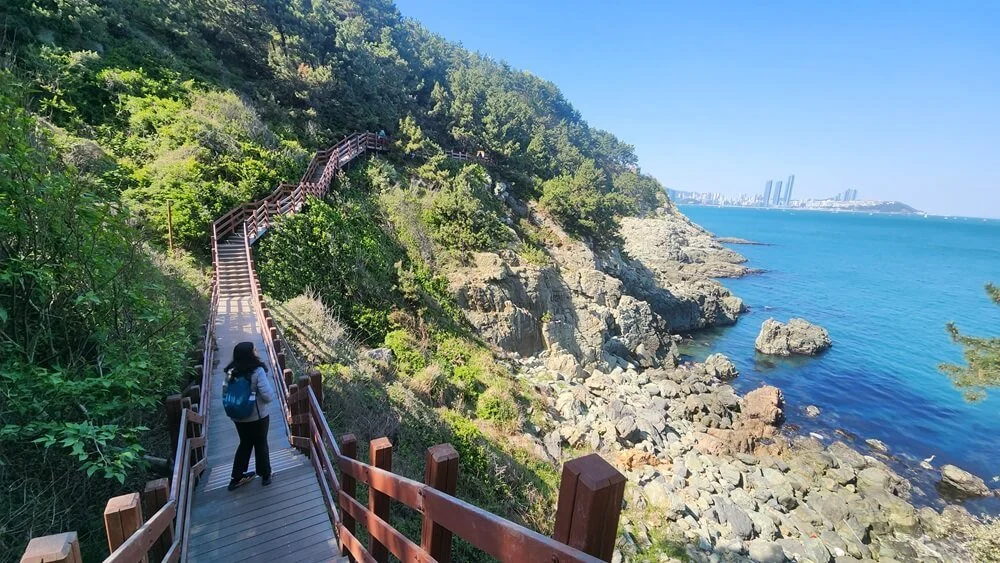
Weekend hiking in Geumjeongsan, K-League matches, coastal cycling trails, open-water swimming at Haeundae and a possibly unhealthy obsession with Busan's street food scene. The city sits between the sea and the mountains and that means your options for a weekend are almost always spectacular. There is always somewhere new to go and something worth doing.
Is there anything you genuinely miss about home?
Proper Scottish winters, which is an objectively strange thing to miss. And occasionally I miss the football culture back home, there's something irreplaceable about a cold Saturday at a Scottish ground with four thousand optimistic strangers. But Busan has its own brilliant football scene and K-League crowds have a completely different kind of atmosphere that I've genuinely come to love. Most things I thought I'd miss have just been replaced by something equally good, often better. The distance from family is the one thing that's genuinely hard at times, but cheap regional flights and video calls have made it far more manageable than I feared.
What would you tell someone earlier in their career?
Korea rewards educators who show up with genuine commitment. Learn a little of the language, even just a few phrases, and you'll be surprised how warmly people respond. Come with an open mind and Korea will give you far more than you bargained for. And if leadership is what you're after, don't wait for a system back home to notice you. Come out here and prove it.