
You spent fifteen years in finance before making a dramatic change. How did that unfold?
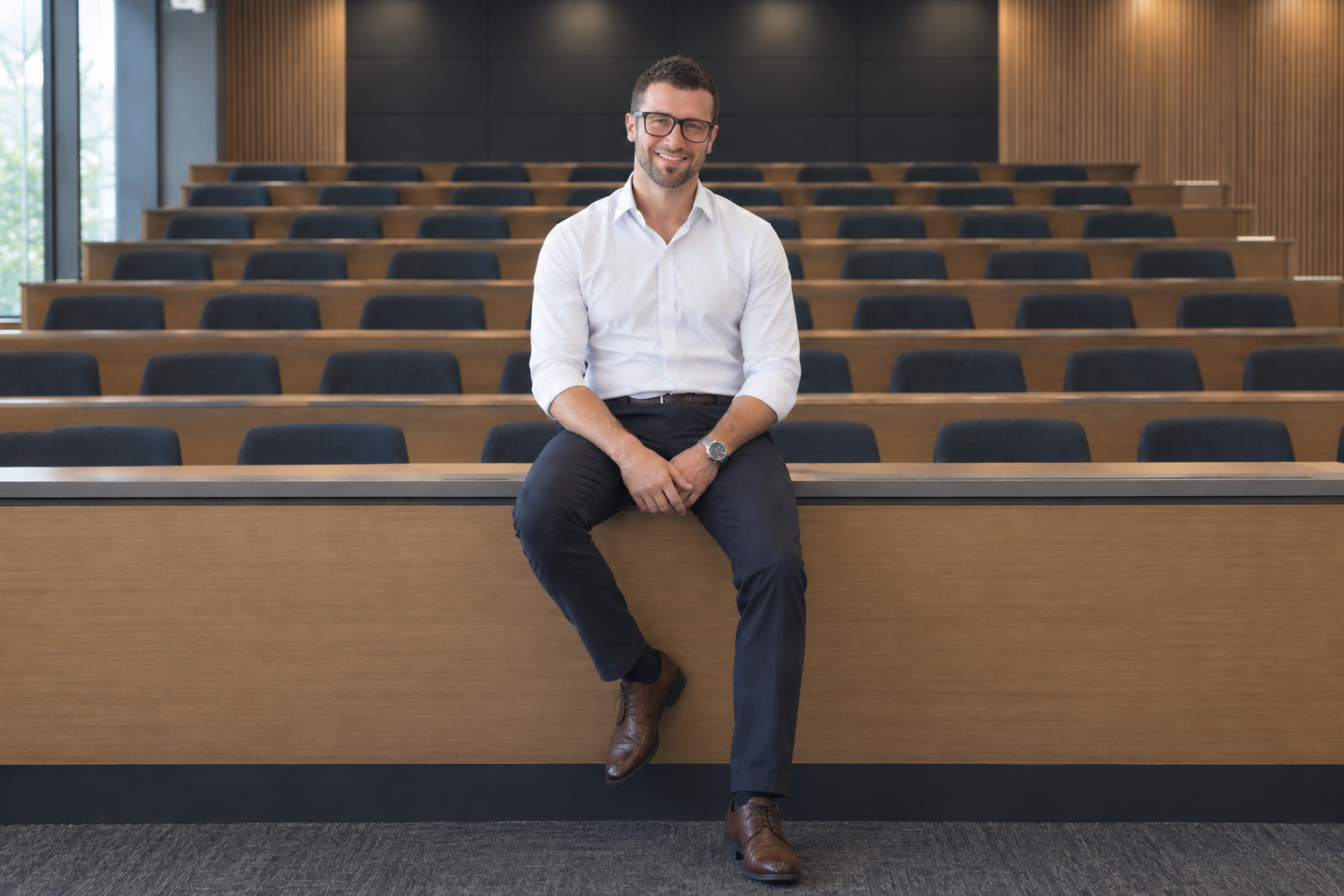
It was a long time coming, if I'm honest. I built a solid career across corporate finance and client advisory work, but the parts of the job I was best at and most energised by were never really about finance. They were about people. I was always the person colleagues came to when they needed to present, communicate, negotiate something difficult. Eventually I had to ask myself why I wasn't doing that professionally. I spent about two years researching the switch seriously before I committed, and I did my CELTA while still employed because I wanted to know it was a genuinely rigorous qualification before I bet my career on it. Then I made a very deliberate decision to target corporate language training rather than school-based teaching, because my professional background wasn't a liability. It was the thing that would get me into rooms that other trainers couldn't access. Bangkok came through a contact in the training world and turned out to be exactly the right environment to build what I was building.
What's it like training business professionals day to day?
It's a completely different discipline to classroom teaching and one that suits me far better. My clients are senior executives, entrepreneurs and ambitious professionals using English to operate at an international level. The conversations are genuinely fascinating. I'm not teaching language in a vacuum, I'm helping people navigate real, high-stakes professional situations, the kind I've sat in myself. Every session draws on something from my previous career and I learn as much from my clients as they take from me. The work feels meaningful in a way that finance, even at its best, rarely did.
A typical day
- 6:00am
- Early Muay Thai training at a local gym before the workday begins, the one part of the day that's non-negotiable no matter how the schedule looks.
- 7:30am
- Breakfast, usually something light like fruit and coffee after training, I've learned the hard way not to eat too much before a session.
- 8:30am
- I commute into Bangkok's business district, reviewing the day's corporate training schedule and running through notes from yesterday's session with one client group.
- 9:00am to 12:00pm
- I deliver business English training for corporate clients, today's group is a mid-level management team working on presentation skills ahead of a regional conference, plenty of practice structuring a pitch and handling tough questions on the spot.
- 12:15pm
- Lunch, a quick Thai meal near the office, today it's pad kra pao, one of those dishes I could genuinely eat most days without getting tired of it.
- 1:00pm to 3:00pm
- Curriculum design work, building materials for an upcoming client programme and going through trainer performance data from the past month to see where the sessions are landing well and where they're not.
- 3:00pm to 5:00pm
- Client meetings, today's is with an HR manager reviewing outcomes from this quarter's programme and starting to scope what the next one should focus on, likely negotiation language given some recent feedback.
- 5:15pm
- I wrap up for the day and head home, sometimes fitting in a second, lighter Muay Thai session in the evening if I've got the energy for it.
- 7:00pm
- Dinner, often at a local restaurant near his apartment.
- 8:30pm
- Evening downtime before an early night, given the early training sessions most mornings.
What didn't you expect about Bangkok?
How completely it would get under my skin, in a good way! The energy here is extraordinary and it hits you immediately. The food is world class at every price point, the city never stops moving, and the warmth you encounter from day one is something you simply don't expect until you experience it. I came for a year with vague ideas about moving on and trying somewhere new. I'm now on my third year and leaving genuinely hasn't crossed my mind.
What does your life look like here?
Bangkok makes it easy. The expat community here is one of the most dynamic in Asia and connecting with people happens almost naturally. I found my footing early through Muay Thai, which I started for fitness and which has become one of the most important parts of my week. I train three mornings a week at a local gym that's mostly Thai, very few foreigners, and the community there has been extraordinary. The coaches have become genuine friends and a few of the regulars I train alongside are people I genuinely rely on. Beyond that I've connected with a photography group that meets monthly to explore different parts of the city together, usually temple complexes, markets or riverside neighbourhoods that most people never think to visit. It's a wonderful mix of nationalities and skill levels and it keeps me curious about Bangkok in a way that matters when you've been somewhere for a while. I've also fallen into a Sunday brunch group of about eight people, mostly trainers and teachers, that has become something I look forward to every single week.
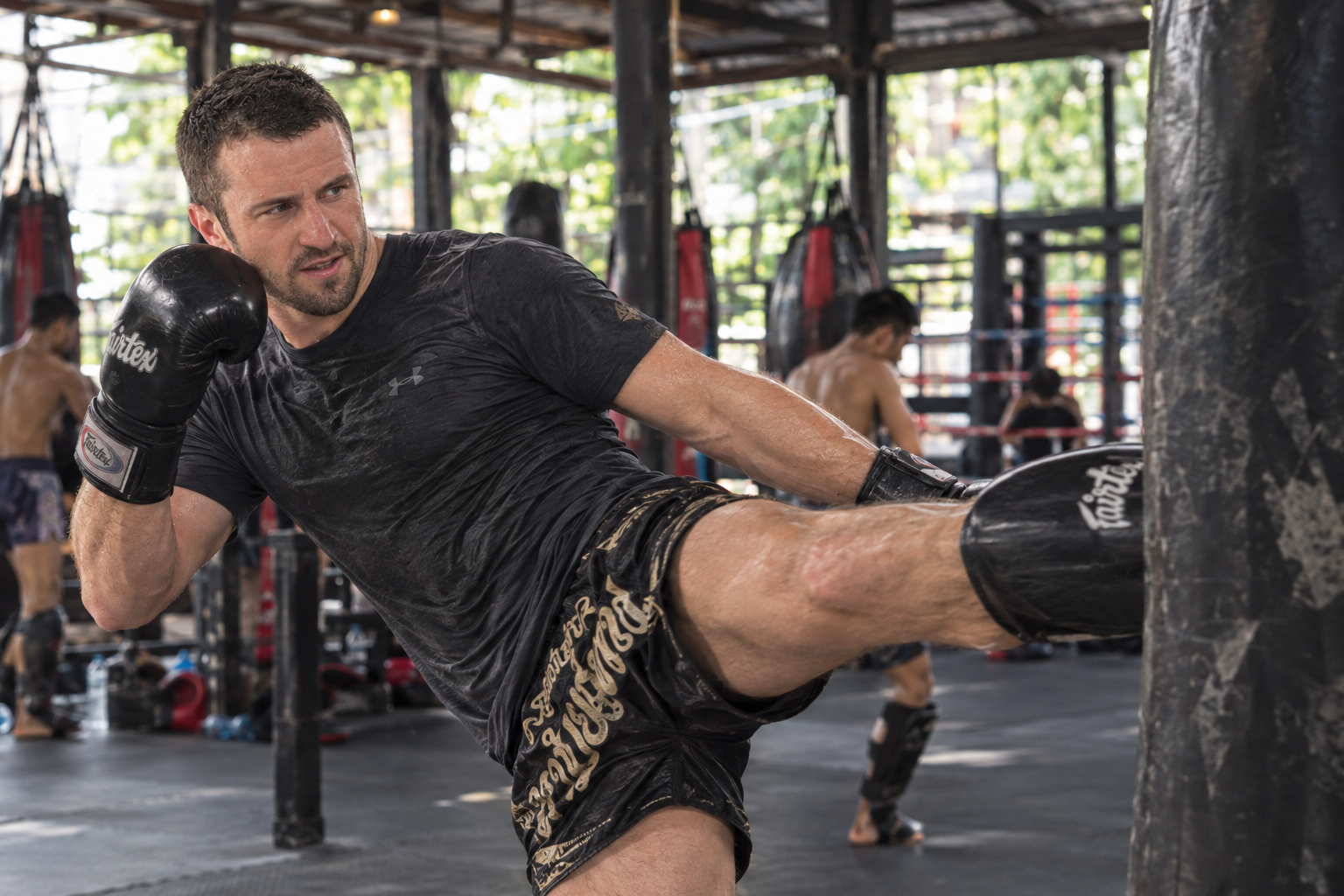
Muay Thai three mornings a week, weekend trips to Chiang Mai and Koh Lanta, monthly photography outings through Bangkok's temple districts and riverside neighbourhoods, and an ongoing attempt to learn Thai that is going considerably better than expected. Bangkok also has a restaurant and café culture that is genuinely extraordinary. I've eaten better here for less money than anywhere else I've ever lived, and I've lived in some cities with considerably bigger reputations.
Is there anything you miss from your previous life?
Cape Town winters, which is an objectively ridiculous thing to say from Bangkok. The Western Cape in July is genuinely one of the most beautiful places on earth and that distance hits occasionally. I also miss biltong more than I care to admit. You can find it in Bangkok if you look hard enough but it costs a fortune and it's never quite right. That said, Thailand has compensated in every other culinary direction imaginable so it's difficult to feel too hard done by. What I don't miss is the feeling of being in the wrong place. That disappeared the moment I made the decision to change, and it hasn't come back.
How easy is it to travel from Bangkok and explore the region?
Incredibly easy, and that's one of the things I love most about being based here. Living in Southeast Asia puts you right in the middle of an enormous part of the world that most people only ever see one corner of. Within a few hours you can be in the Philippines, Bali, Singapore, or even India, and the airfares are so dirt cheap compared to what I was used to back home that you almost feel guilty. A long weekend somewhere becomes a completely normal thing rather than a big planned event. Last weekend I was in Phuket, in two weeks I'm off to Sri Lanka. It's awesome if you love travelling and experiencing new cultures!
For anyone with a professional background thinking about making the switch
Your industry experience is not something you leave behind. It's the thing that will set you apart. The demand for trainers who genuinely understand business, law, finance or any professional field is enormous and growing. There are clients across this part of the world who will pay premium rates for a trainer who has actually sat in the boardroom, negotiated the deal, and actually felt the pressure of the situation they're now preparing for. Stop thinking about it and back yourself. The life waiting on the other side of that decision is genuinely extraordinary.